 Reviews


 Proudly American


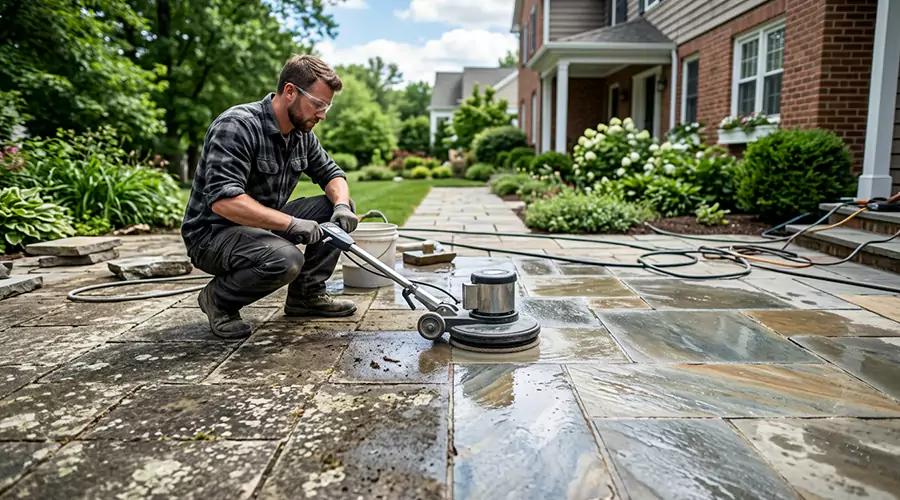
Damaged natural stone is restored by identifying the stone and the type of damage before choosing the repair method. Stains may require extraction while scratches or etching usually need surface refinishing. Cracks and chips require repair before the surface is honed or polished. For stone floors affected by leaks or moisture, water damage floor repair may also be necessary to address damage beneath or around the stone surface.
Natural stone restoration is different from ordinary cleaning because physical damage cannot be washed away. Marble or travertine may also react very differently from granite, so one cleaning product should not be used blindly on every stone.
What Types of Natural Stone Damage Can Be Restored?
Many cosmetic defects can be repaired without replacing the entire stone installation. The correct method depends on whether the problem affects the surface appearance or the physical structure of the stone.
Common problems include:
- Etch marks
- Surface scratches
- Stains
- Chips
- Small cracks
- Dull traffic areas
- Lost polish
- Damaged travertine filler
The Natural Stone Institute notes that light scratches can sometimes be buffed while deeper scratches generally require refinishing or repolishing. Stain treatment also depends on identifying what caused the discoloration.
How Does Natural Stone Restoration Work?
Natural stone restoration usually moves from inspection to cleaning before physical surface correction begins. Cracks or failed filler are addressed before aggressive honing. The surface can then be refined to match the intended finish.
A typical sequence is:
- Identify the stone.
- Determine the damage type.
- Deep clean the surface.
- Treat stains where needed.
- Repair cracks or chips.
- Hone damaged areas.
- Polish to the desired finish.
- Apply a suitable sealer when needed.
Stone restoration should preserve the character of the material rather than force every surface into a high-gloss appearance.
How Are Stains Removed From Natural Stone?
A stain changes the stone's color because another substance has moved into its pores. The treatment depends on the source of the stain. Oil stains need a different approach than rust or organic discoloration. A poultice can draw some stains out of porous stone. The Natural Stone Institute recommends identifying the stain first because choosing the wrong chemical can make removal more difficult. Do not confuse staining with etching. A stain changes color while an etch mark changes the surface texture.
How Are Etch Marks and Scratches Repaired?
Etching occurs when a substance reacts with the stone and changes its finish. Marble and other calcium-based stones are especially sensitive to acidic substances. Honing removes a very thin damaged surface layer before the finish is refined again.
| Damage | Typical Restoration Method |
|---|---|
| Light dullness | Polishing |
| Etch marks | Honing then refinishing |
| Fine scratches | Light honing or polishing |
| Deeper scratches | Progressive honing |
| Uneven surface wear | More extensive resurfacing |
Marble refinishing can correct widespread etching that ordinary marble cleaning and polishing cannot remove.
How Are Cracks and Chips Repaired?
Small chips and stable cracks can often be filled with a compatible repair material before the repaired area is refinished. Color matching helps the repair blend with the surrounding stone. Deep structural cracks deserve more caution because they can indicate movement below the installation. Travertine restoration may also involve replacing failed filler inside natural pits. Loose filler should be addressed before honing because unstable areas can break apart during machine work.
Can Marble and Travertine Be Restored?
Yes. Marble is commonly restored through honing followed by polishing or another chosen finish. Surface etching and traffic wear are often good candidates because the damaged upper layer can be refined without replacing the entire floor. Marble restoration becomes more involved when cracks or deep stains are present. Travertine floor restoration can include filler repair before honing. A honed finish may be preferred in some areas because natural stone does not always need a mirror gloss.
What About Granite Damage?
Granite can often be restored when the problem is dullness or minor scratching. Chips can also be repaired when the surrounding slab remains stable. Granite is harder than marble, so refinishing requires methods suited to the stone. Do not assume that a sealer will fix scratches. Sealers reduce the stone's ability to absorb certain liquids, but they do not rebuild damaged surface texture.
What Can You Safely Check Yourself?
A simple inspection can help determine what type of damage you have before any treatment begins.
Use these steps:
- Clean a small area with a stone-safe cleaner.
- Let the surface dry.
- Look at the damaged area from an angle.
- Check whether the mark changes color or texture.
- Run a fingertip lightly across the surface.
A smooth dark mark is more likely to be a stain. A dull area with a changed texture may be an etch mark. Avoid testing acidic household cleaners on natural stone. They can create new damage on acid-sensitive materials.
When Should You Call a Professional?
Professional assessment is appropriate when the damage involves deep scratches or widespread etching. Structural cracks also need closer evaluation before the stone is resurfaced. The Natural Stone Institute recommends professional refinishing for deeper scratches and etching that cannot be corrected with limited maintenance.
Consider help when:
- Cracks continue growing.
- Stone sections feel loose.
- Deep scratches cover a large area.
- Lippage creates uneven tile edges.
- Old repairs are failing.
- Stains remain after appropriate treatment.
- The stone type is uncertain.
Stone floor restoration often uses diamond abrasives that permanently change the surface. Incorrect grinding can create low spots or an uneven finish.
How Can You Protect Restored Natural Stone?
Restored stone lasts longer when abrasive dirt and harsh chemicals are kept off the surface. Use a cleaner made for natural stone. Spills should be blotted promptly rather than rubbed across a polished finish.
Useful habits include:
- Dust mop stone floors regularly.
- Use mats near exterior entrances.
- Blot spills promptly.
- Avoid acidic cleaners on sensitive stone.
- Use a suitable penetrating sealer when needed.
- Inspect old filler or cracks periodically.
Conclusion
Damaged natural stone can often be restored without replacement when the material remains stable. Stains require a different treatment from etching, while scratches usually need honing or polishing. Cracks and chips should be repaired before refinishing begins. If damage is deep or the stone type is unclear, professional evaluation can prevent an incorrect treatment from permanently changing the surface.
Frequently Asked Questions
Can badly scratched stone be restored?
Often, yes. Deeper scratches may require honing before the surface is polished again.
Can stains be polished out of stone?
Not always. A true stain sits within the stone and may need a poultice rather than polishing.
Can etched marble be restored?
Yes. Honing can remove the damaged surface layer before the desired finish is restored.
Does natural stone always need sealing after restoration?
No. Sealing depends on stone porosity and the installation. A sealer also does not prevent physical scratching.
Can cracked stone be repaired without replacing it?
Small stable cracks can often be filled and refinished. Structural movement must be corrected if it is causing repeated cracking.
Is polishing the same as restoration?
No. Polishing restores sheen. Full restoration may also involve stain treatment or repairs before polishing.